-
All Products
- Hydraulic Power Systems & Components
- Hydraulic Pumps & Accessories
- Hydraulic Motors & Accessories
- Hydrostatic Transmissions
- Cylinders & Accessories
- Steering Units & Accessories
- Hydraulic Valves & Accessories
- Ball Valves
- Check Valves
- Check Valves (Pilot-Operated)
- Counterbalance Valves (Overcenter Valves)
- Cushion Valves (Double Relief Valves)
- Directional Control Valves
- Flow Control Valves
- Flow Divider Valves
- Gate Valves
- Shop Logic Element Valves
- Needle Valves
- Plug Valves
- Pressure Reducing Valves
- Relief Valves
- Shop Sandwich Valves
- Premium Selector Valves
- Hydraulic Filters & Accessories
- Power Units
- System Accessories
- High Force Hydraulics
- Hydraulic Pumps & Accessories
- Pneumatic Power & Control
- Fluid Conveying
- Hose Products
- Tubing Products
- Piping Products
- Adapters
- Steel
- O-Ring Face Seal Braze Adapters
- O-Ring Face Seal To Straight Thread O-Ring
- O-Ring Face Seal To Pipe
- O-Ring Face Seal To 37° Flare
- O-Ring Face Seal To O-Ring Face Seal
- O-Ring Face Seal Accessories
- Pipe To Pipe
- Pipe to 37° Flare
- Pipe To Straight Thread O-Ring
- Pipe To Hose
- 37° Flare Union
- Straight Thread O-Ring to 37° Flare
- Straight Thread O-Ring to Straight Thread O-Ring
- Straight Thread O-Ring to Hose
- SAE Split Flange To 37° Flare
- SAE Split Flange To O-Ring Face Seal
- Braze & Weld to 37° Flare
- 42° Inverted Flare to 37° Flare
- Restrictor
- Metric to 37° Flare
- Metric to Pipe
- Metric
- BSPP to 37° Flare
- BSPP to Pipe
- BSPP to Metric
- BSPP to BSPT
- BSPP
- BSPT To Pipe
- BSPT To 37° Flare
- JIS
- JIS 30° Seat (BSPP Thread) To 37° Flare
- Komatsu, Kobelco
- Stainless Steel
- Brass
- Steel
- Hydraulic Quick Disconnects
- Miscellaneous Fluid Conveying Parts
- Performance Parts
- Hose
- Adapters
- Brake System Adapters
- Fuel System Components
- Couplings
- PRO CLAMP and Overbraid
- Accessories
- Reusable Fittings for AQP & Starlite Racing Hose
- Crimp Fittings for AQP & Starlite Racing Hose
- Fittings for AQP Socketless Hose
- Reusable Fittings for Aeroquip FBF A/C Hose
- Fittings for Teflon Racing Hose
- Reusable Fittings for AQP High Pressure Hose
- Assembly Equipment
- Hose Products
- Other Products
- Seals
- Control Cables
- Thread Sealants
- Gloves
- Hand Tools
- Pressure Washer Products for Industrial & Commercial Use
- Hose Reels
- Winches
- Peel Press Drive
- Hydraulic Fluids & Oils for Industrial Systems
- Industrial Chemical Maintenance Products
- Lubrication Equipment & Accessories
- Cable Hardware & Knobs
- Cable Remote Controls
- Industrial Corrosion Inhibitors
- Y Strainer
- Hydraulic Power Systems & Components
- Services
- Branch Locations
- Catalogs
- Quick Order
- Help
HSC Q&A
-
- February 24, 2026
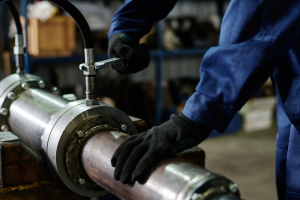
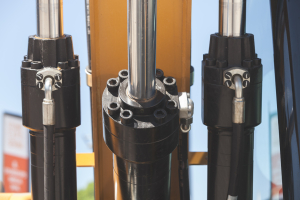
Hydraulic cylinders are the driving force behind countless pieces of equipment used every day in mobile and industrial operations. When a machine needs controlled linear motion, the cylinder is what converts hydraulic pressure into usable mechanical force, and the type selected directly affects how that equipment operates in the field.
Cylinder design influences how a system responds under load and how well it integrates within the equipment structure, and can also affect long-term durability. Selecting the wrong hydraulic cylinder type can shorten service life and reduce efficiency. This article breaks down the primary hydraulic cylinder types, how each one operates in real applications, and what you need to know to approach selection with confidence.
What Are Hydraulic Cylinders?
A hydraulic cylinder is a mechanical actuator that converts hydraulic pressure into linear force. When pressurized fluid enters the cylinder barrel, it pushes against a piston, and that movement drives the rod
-
- April 13, 2025
How Does a Hydraulic System Work?
Hydraulic systems are the backbone of countless machines and operations across industries. From powering excavators on a construction site to steering massive vessels at sea, hydraulics offer a highly efficient way to transfer energy and control motion. But how does this technology actually work, and why is it so widely used?
At its core, a hydraulic system is a method of transmitting power through the use of pressurized fluid. By converting mechanical energy into fluid energy and back again, these systems deliver the force needed to lift, push, pull, or rotate heavy loads with precision.
Hydraulics are essential in industries like construction, agriculture, manufacturing, and automotive, where durability, reliability, and power are non-negotiable. Whether you're maintaining a fleet of tractors or designing automated manufacturing lines, understanding how hydraulic systems work can help you maximize efficiency and minimize downtime.
In this article, we’ll
-
- April 02, 2025
Choosing the Right Hydraulic Pump for Maximum Performance
Hydraulic pumps play a vital role in hydraulic systems by converting mechanical energy into hydraulic power. They are responsible for moving fluid to generate the force needed to operate machinery in industries like construction, agriculture, and manufacturing.
Choosing the right hydraulic pump is essential for ensuring optimal performance, reducing downtime, and extending the lifespan of equipment. The wrong pump can lead to inefficiencies, overheating, and unnecessary wear and tear on the system.
There are several types of hydraulic pumps, each designed for specific applications. This blog will cover the most common types, how they function, and how to determine the best option for your needs.
What Type of Pump is a Hydraulic Pump?
Hydraulic pumps convert mechanical power into hydraulic energy by moving fluid through a system, creating the necessary pressure to power hydraulic machinery. Unlike standard pumps that simply transfer
-
- January 10, 2025
How often should you replace your hydraulic hoses? See our experts have to say.
-
- October 10, 2024
Do you know the difference between single-wire and double-wire hydraulic hoses?
-
- September 30, 2024
Not sure which hydraulic hose is right for your application? Keep reading for more...
Quick Add Product
Account Summary
Short Code:
Credit Limit:
Current Balance:
Recent Posts