
-
All Products
- Hydraulic Power Systems & Components
- Hydraulic Pumps & Accessories
- Hydraulic Motors & Accessories
- Hydrostatic Transmissions
- Cylinders & Accessories
- Steering Units & Accessories
- Hydraulic Valves & Accessories
- Ball Valves
- Check Valves
- Check Valves (Pilot-Operated)
- Counterbalance Valves (Overcenter Valves)
- Cushion Valves (Double Relief Valves)
- Directional Control Valves
- Flow Control Valves
- Flow Divider Valves
- Gate Valves
- Shop Logic Element Valves
- Needle Valves
- Plug Valves
- Pressure Reducing Valves
- Relief Valves
- Shop Sandwich Valves
- Premium Selector Valves
- Hydraulic Filters & Accessories
- Power Units
- System Accessories
- High Force Hydraulics
- Hydraulic Pumps & Accessories
- Pneumatic Power & Control
- Fluid Conveying
- Hose Products
- Tubing Products
- Piping Products
- Adapters
- Steel
- O-Ring Face Seal Braze Adapters
- O-Ring Face Seal To Straight Thread O-Ring
- O-Ring Face Seal To Pipe
- O-Ring Face Seal To 37° Flare
- O-Ring Face Seal To O-Ring Face Seal
- O-Ring Face Seal Accessories
- Pipe To Pipe
- Pipe to 37° Flare
- Pipe To Straight Thread O-Ring
- Pipe To Hose
- 37° Flare Union
- Straight Thread O-Ring to 37° Flare
- Straight Thread O-Ring to Straight Thread O-Ring
- Straight Thread O-Ring to Hose
- SAE Split Flange To 37° Flare
- SAE Split Flange To O-Ring Face Seal
- Braze & Weld to 37° Flare
- 42° Inverted Flare to 37° Flare
- Restrictor
- Metric to 37° Flare
- Metric to Pipe
- Metric
- BSPP to 37° Flare
- BSPP to Pipe
- BSPP to Metric
- BSPP to BSPT
- BSPP
- BSPT To Pipe
- BSPT To 37° Flare
- JIS
- JIS 30° Seat (BSPP Thread) To 37° Flare
- Komatsu, Kobelco
- Stainless Steel
- Brass
- Steel
- Hydraulic Quick Disconnects
- Miscellaneous Fluid Conveying Parts
- Performance Parts
- Hose
- Adapters
- Brake System Adapters
- Fuel System Components
- Couplings
- PRO CLAMP and Overbraid
- Accessories
- Reusable Fittings for AQP & Starlite Racing Hose
- Crimp Fittings for AQP & Starlite Racing Hose
- Fittings for AQP Socketless Hose
- Reusable Fittings for Aeroquip FBF A/C Hose
- Fittings for Teflon Racing Hose
- Reusable Fittings for AQP High Pressure Hose
- Assembly Equipment
- Hose Products
- Other Products
- Seals
- Control Cables
- Thread Sealants
- Gloves
- Hand Tools
- Pressure Washer Products for Industrial & Commercial Use
- Hose Reels
- Winches
- Peel Press Drive
- Hydraulic Fluids & Oils for Industrial Systems
- Industrial Chemical Maintenance Products
- Lubrication Equipment & Accessories
- Cable Hardware & Knobs
- Cable Remote Controls
- Industrial Corrosion Inhibitors
- Y Strainer
- Hydraulic Power Systems & Components
- Services
- Branch Locations
- Catalogs
- Quick Order
- Help
Centrifugal Pumps
Centrifugal pumps are essential for efficient fluid transfer and pressure stability in hydraulic systems across industrial applications. Designed for reliability and performance, these pumps deliver consistent flow rates for moving low-viscosity fluids such as water, oil, and coolant.
Our 9300C Series Hydraulic Motor-Driven Centrifugal Pumps provide high-capacity performance, offering up to 114 GPM at 180 PSI, with a 13 GPM, 2000 PSI motor drive. Built for durability, these pumps support both open and closed center hydraulic systems, ensuring compatibility with various operations. Engineered for demanding environments, they help minimize downtime while maintaining long-term system efficiency.
Need help selecting the right pump? Contact our experts for guidance, or explore our repair services to keep your system running at peak performance.
-
 9300C Series Hydraulic Motor Driven Centrifugal Pumps, Up To 114 GPM & 180 PSI
Product is currently not available online.
Please call 800-507-9651 for assistance. -
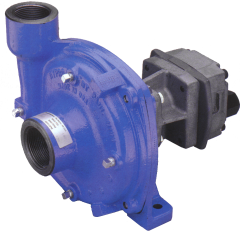 9300C Series Hydraulic Motor Driven Centrifugal Pump, Open & Closed Center, 13 GPM 2000 PSI Motor Capacity
Product is currently not available online.
Please call 800-507-9651 for assistance.
My Wish List
Last Added Items

You have no items in your wish list.
Quick Add Product
Account Summary
Short Code:
Credit Limit:
Current Balance:
Benefits of Centrifugal Pumps for Hydraulic Systems
Centrifugal pumps offer seamless, energy-efficient fluid transfer, making them ideal for industrial applications requiring steady pressure and high flow rates. Their non-pulsating flow prevents pressure fluctuations, reducing stress on system components and ensuring consistent performance in hydraulic circuits.
One of the biggest advantages of centrifugal pumps is their simple yet durable design, which requires minimal maintenance compared to other pump types. With fewer moving parts, they experience less wear and tear, leading to lower operating costs and extended service life.
Additionally, 9300C Series pumps are built for high-demand environments, offering dependable performance under continuous operation. Their ability to handle both open and closed center hydraulic configurations ensures flexibility, making them a cost-effective investment for industries where downtime is not an option.
Choosing the Right Centrifugal Pump for Your Hydraulic Application
Selecting the right centrifugal pump is crucial for ensuring optimal performance in your hydraulic system. Key factors to consider include flow rate, pressure capacity, and system compatibility to match your specific operational needs.
Flow rate is a primary consideration; applications requiring high-capacity fluid transfer may benefit from a pump capable of 114 GPM, while lower-flow systems may need a 13 GPM option. Pressure requirements also play a vital role; with a 180 PSI capacity and a 2000 PSI hydraulic motor drive, the right pump ensures steady performance without system strain. Additionally, choosing a pump that supports both open and closed center hydraulic configurations provides flexibility and compatibility across various setups.
The 9300C Series Hydraulic Motor-Driven Centrifugal Pumps offer a reliable, high-performance solution for industrial applications, delivering efficiency and durability in demanding environments. If you need assistance selecting the best pump for your system, contact our experts for guidance.
Centrifugal Pumps FAQs
What is the difference between a hydraulic motor-driven centrifugal pump and other pump types?
A hydraulic motor-driven centrifugal pump uses hydraulic power instead of electricity to drive the impeller, making it ideal for mobile or remote applications where electrical power may not be available. Unlike gear or piston pumps, centrifugal pumps excel at handling high-flow, low-viscosity fluids with smooth and continuous operation.
How do I select the right centrifugal pump for my system’s flow and pressure requirements?
Choosing the right pump depends on your system’s flow rate and pressure needs. For high-capacity applications, a pump with 114 GPM and 180 PSI may be suitable, while lower-flow systems might require 13 GPM with a 2000 PSI motor drive. Ensuring compatibility with your hydraulic system type (open or closed center) is also critical. If unsure, contact our experts for guidance.
Are centrifugal pumps suitable for both open and closed center hydraulic systems?
Yes, many hydraulic motor-driven centrifugal pumps, including the 9300C Series, are designed to work with both open and closed center hydraulic systems. This versatility allows for seamless integration across different industrial applications.
What maintenance is required to ensure long service life for centrifugal pumps?
Regular inspection, cleaning, and lubrication help extend pump life and maintain efficiency. Checking for clogged filters, worn seals, or impeller damage can prevent performance issues. Ensuring proper fluid levels and system pressure also minimizes wear. For professional servicing, explore our repair services.