-
All Products
- Hydraulic Power Systems & Components
- Hydraulic Pumps & Accessories
- Hydraulic Motors & Accessories
- Hydrostatic Transmissions
- Cylinders & Accessories
- Steering Units & Accessories
- Hydraulic Valves & Accessories
- Ball Valves
- Check Valves
- Check Valves (Pilot-Operated)
- Counterbalance Valves (Overcenter Valves)
- Cushion Valves (Double Relief Valves)
- Directional Control Valves
- Flow Control Valves
- Flow Divider Valves
- Gate Valves
- Shop Logic Element Valves
- Needle Valves
- Plug Valves
- Pressure Reducing Valves
- Relief Valves
- Shop Sandwich Valves
- Premium Selector Valves
- Hydraulic Filters & Accessories
- Power Units
- System Accessories
- High Force Hydraulics
- Hydraulic Pumps & Accessories
- Pneumatic Power & Control
- Fluid Conveying
- Hose Products
- Tubing Products
- Piping Products
- Adapters
- Steel
- O-Ring Face Seal Braze Adapters
- O-Ring Face Seal To Straight Thread O-Ring
- O-Ring Face Seal To Pipe
- O-Ring Face Seal To 37° Flare
- O-Ring Face Seal To O-Ring Face Seal
- O-Ring Face Seal Accessories
- Pipe To Pipe
- Pipe to 37° Flare
- Pipe To Straight Thread O-Ring
- Pipe To Hose
- 37° Flare Union
- Straight Thread O-Ring to 37° Flare
- Straight Thread O-Ring to Straight Thread O-Ring
- Straight Thread O-Ring to Hose
- SAE Split Flange To 37° Flare
- SAE Split Flange To O-Ring Face Seal
- Braze & Weld to 37° Flare
- 42° Inverted Flare to 37° Flare
- Restrictor
- Metric to 37° Flare
- Metric to Pipe
- Metric
- BSPP to 37° Flare
- BSPP to Pipe
- BSPP to Metric
- BSPP to BSPT
- BSPP
- BSPT To Pipe
- BSPT To 37° Flare
- JIS
- JIS 30° Seat (BSPP Thread) To 37° Flare
- Komatsu, Kobelco
- Stainless Steel
- Brass
- Steel
- Hydraulic Quick Disconnects
- Miscellaneous Fluid Conveying Parts
- Performance Parts
- Hose
- Adapters
- Brake System Adapters
- Fuel System Components
- Couplings
- PRO CLAMP and Overbraid
- Accessories
- Reusable Fittings for AQP & Starlite Racing Hose
- Crimp Fittings for AQP & Starlite Racing Hose
- Fittings for AQP Socketless Hose
- Reusable Fittings for Aeroquip FBF A/C Hose
- Fittings for Teflon Racing Hose
- Reusable Fittings for AQP High Pressure Hose
- Assembly Equipment
- Hose Products
- Other Products
- Seals
- Control Cables
- Thread Sealants
- Gloves
- Hand Tools
- Pressure Washer Products for Industrial & Commercial Use
- Hose Reels
- Winches
- Peel Press Drive
- Hydraulic Fluids & Oils for Industrial Systems
- Industrial Chemical Maintenance Products
- Lubrication Equipment & Accessories
- Cable Hardware & Knobs
- Cable Remote Controls
- Industrial Corrosion Inhibitors
- Y Strainer
- Hydraulic Power Systems & Components
- Services
- Branch Locations
- Catalogs
- Quick Order
- Help
Types of Hydraulic Hoses and Where Each One Is Used
Published February 17, 2026 | Last Updated March 25, 2026
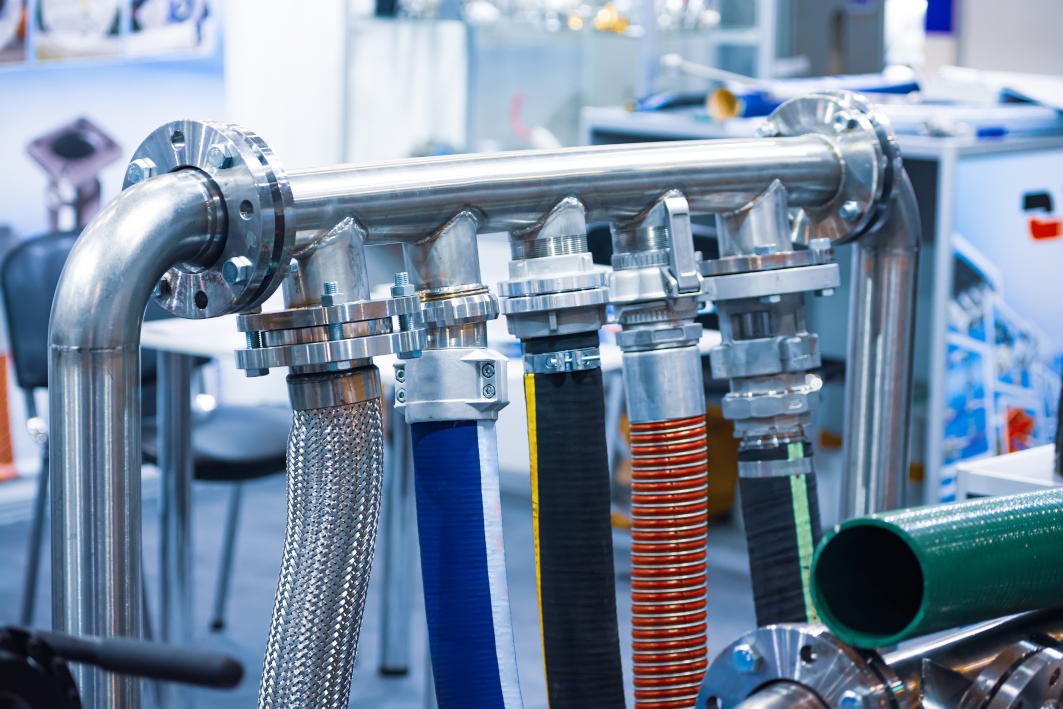
Hydraulic hoses are fundamental to fluid power systems across construction, agriculture, manufacturing, marine, and energy operations. While they may appear straightforward, hose construction varies significantly in reinforcement style, pressure capability, flexibility, and environmental resistance. Those differences directly impact performance in mobile hydraulics and industrial equipment.
Understanding the types of hydraulic hoses and where each one is typically used allows engineers, maintenance teams, and procurement professionals to specify components with confidence. This guide outlines the most common hydraulic hose types, explains how they differ by construction and pressure rating, and clarifies which options are best suited for heavy machinery, industrial systems, and high-demand applications.
What Is a Hydraulic Hose?
A hydraulic hose is a flexible, reinforced conduit that transfers pressurized hydraulic fluid between system components such as pumps, valves, cylinders, and motors. Unlike rigid steel tubing, a hose allows for movement, vibration absorption, and compact routing in tight spaces.
Most hydraulic hoses share a three-layer construction:
-
An inner tube that carries the hydraulic fluid
-
A reinforcement layer that provides strength and pressure resistance
-
An outer cover that protects against abrasion, weather, chemicals, and environmental damage
The combination of these layers determines the hose’s pressure rating, flexibility, temperature capability, and durability.
What Are Hydraulic Hoses Used For?
Hydraulic hoses transmit fluid power. Pressurized hydraulic fluid converts mechanical energy into force and motion, allowing heavy equipment and industrial machinery to lift, push, rotate, clamp, or steer with precision.
Across industries, hydraulic hoses are commonly used in:
-
Construction and mining equipment such as excavators, loaders, and haul trucks
-
Agricultural machinery, including tractors, harvesters, and sprayers
-
Marine steering systems and deck equipment
-
Industrial presses, injection molding machines, and material handling systems
-
Oil and gas drilling and support equipment
Mobile hydraulics often demand hoses that can handle vibration, shock loads, and constant movement. Industrial applications may place greater emphasis on temperature resistance, chemical compatibility, or long-term pressure stability.
What Are Hydraulic Hoses Made Of?
Hydraulic hoses are engineered to handle high pressure, heat, and fluid exposure. The materials used in each layer determine overall performance.
Inner Tube Materials
The inner tube must be compatible with the hydraulic fluid. Common materials include synthetic rubber compounds for petroleum-based fluids, thermoplastics for lightweight or specialty applications, and polytetrafluoroethylene (PTFE) for aggressive chemicals or high temperatures.
Fluid compatibility is critical. Using the wrong inner tube material can lead to swelling, cracking, or internal degradation that is not immediately visible from the outside.
Reinforcement Layers
Reinforcement provides the strength that allows a hose to safely contain pressurized fluid. This layer may consist of braided steel wire, spiral-wound steel wire, textile braids, or high-strength synthetic fibers.
The reinforcement style directly affects pressure capacity and impulse life. Systems that experience frequent pressure spikes require hoses designed to withstand repeated stress cycles.
Outer Cover
The outer cover shields the hose from abrasion, ultraviolet exposure, oil, chemicals, and physical impact. In heavy equipment and mobile hydraulics, abrasion resistance is especially important because hoses often contact metal edges, debris, or other moving components. For critical installations, hose protection products such as abrasion sleeves and fire sleeves can further extend service life.
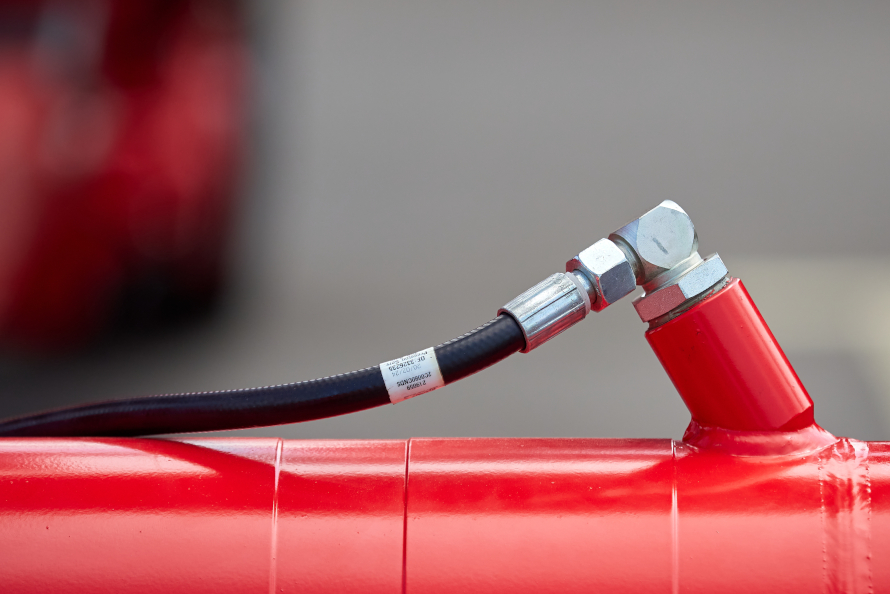
What Are the 4 Types of Hydraulic Hoses?
When discussing hydraulic hose types, most applications fall into four primary categories based on construction and reinforcement style.
1. Wire-Braided Hydraulic Hoses
Wire-braided hoses use one or two layers of braided steel wire around a rubber inner tube. They are among the most widely used types of hydraulic hoses in mobile and industrial systems.
These hoses offer a strong balance between flexibility and pressure capability. Two-wire braided hoses are common in construction equipment, agricultural machinery, and general industrial hydraulics. They handle moderate to high pressures while remaining flexible enough for routing through moving assemblies.
Wire-braided hoses are often the default choice for mobile equipment that operates in demanding but not extreme pressure conditions.
2. Spiral-Wound Hydraulic Hoses
Spiral-wound hoses use multiple layers of steel wire wrapped in alternating spiral directions. This construction provides significantly higher pressure capacity and improved resistance to pressure impulses.
Spiral hose is commonly used in mining equipment, large excavators, forestry machinery, and oil and gas systems where operating pressures are severe and duty cycles are intense. These hoses are less flexible than braided options but excel in high-pressure, heavy-duty environments.
For applications involving continuous shock loads or extreme system pressures, spiral-wound hydraulic hose types are typically preferred.
3. Thermoplastic Hydraulic Hoses
Thermoplastic hoses use a thermoplastic inner core and often synthetic fiber reinforcement. They are lighter in weight and can offer tighter bend radii than traditional rubber hoses.
These hoses are frequently used in aerial lift equipment, hydraulic tools, and material handling systems. Some thermoplastic hoses are non-conductive, making them suitable for applications near electrical equipment.
Thermoplastic construction provides strong chemical resistance and reduced moisture absorption, which can be beneficial in washdown or humid environments.
4. PTFE Hydraulic Hoses
PTFE hoses feature a polytetrafluoroethylene inner tube, often reinforced with stainless steel braid. They provide exceptional chemical compatibility and high temperature resistance.
PTFE hose types are commonly found in chemical processing, high-temperature industrial systems, and applications requiring broad fluid compatibility. They also have a low coefficient of friction, which supports smooth fluid flow.
Although typically more specialized, PTFE hoses are essential where rubber-based materials cannot withstand the operating environment.
Different Types of Hydraulic Hoses by Pressure Rating
Beyond construction style, hydraulic hose types are also categorized by pressure class. Selecting the proper working pressure rating is essential for safety and long-term performance.
Hoses are generally classified as low, medium, high, or very high pressure. The working pressure must meet or exceed the system’s maximum operating pressure, including anticipated pressure spikes. Burst pressure ratings provide an additional safety margin but should never be used as a substitute for proper working pressure selection.
In heavy machinery and mobile hydraulics, under-specifying pressure capacity can result in premature failure. Over-specifying may increase cost and reduce flexibility. The goal is to match the hose precisely to system demands.
Hydraulic Hose Connector Types and Compatibility
Even the correct hose will fail if paired with incompatible fittings. Hydraulic hose connector types determine how the hose assembly interfaces with pumps, valves, cylinders, and other components.
Common connector styles include JIC 37-degree flare fittings, National Pipe Thread (NPT), O-Ring Face Seal (ORFS), SAE flange connections, and various metric fittings. Each connection type is designed for specific pressure ranges and sealing methods.
Proper selection requires attention to thread type, sealing surface, pressure rating, and compatibility with the hose reinforcement style. Crimp specifications must align with both the hose and fitting manufacturer guidelines to ensure a secure hose assembly.
Choosing the Right Hydraulic Hose for Mobile and Industrial Applications
Selecting from different types of hydraulic hoses involves more than matching pressure ratings. Several practical considerations influence long-term performance.
The operating environment plays a major role. Equipment exposed to abrasive materials, ultraviolet radiation, saltwater, or extreme temperatures requires hoses with protective outer covers suited to those conditions. Hydraulic Supply Company carries over 2,000 hose products from leading manufacturers to match any operating environment.
Movement and routing also matter. Mobile hydraulics often demand tighter bend radii and greater flexibility than fixed industrial installations. In contrast, stationary industrial systems may prioritize pressure stability and temperature resistance.
Fluid compatibility must be verified. Petroleum-based fluids, synthetic hydraulic oils, water-glycol solutions, and specialty chemicals each require compatible inner tube materials.
Working with a knowledgeable fluid power partner simplifies this process. Hydraulic Supply Company supports contractors, OEMs, MRO teams, and industrial operators with expert hose selection guidance and a broad inventory of hydraulic hose products to match application requirements.
Making Hose Selection a Strategic Decision
Hydraulic hoses may appear simple, but they are engineered components that directly influence system safety, uptime, and performance. Understanding what a hydraulic hose is, what hydraulic hoses are used for, what they are made of, and how hydraulic hose types differ gives maintenance teams and engineers a practical advantage.
Wire-braided hoses serve most general-purpose applications. Spiral-wound hoses handle extreme pressure and heavy-duty cycles. Thermoplastic hoses offer lightweight flexibility and chemical resistance. PTFE hoses provide high temperature and broad fluid compatibility.
Selecting the right hose the first time reduces failures, supports equipment longevity, and protects productivity. If you need guidance identifying the best solution for your mobile hydraulics or industrial system, Hydraulic Supply Company’s specialists are ready to help.
Explore our full selection of hydraulic hoses to find the right solution for your application.
Frequently Asked Questions
What Are the Main Types of Hydraulic Hoses?
The main hydraulic hose types include wire-braided hoses, spiral-wound hoses, thermoplastic hoses, and PTFE hoses. Each type differs in reinforcement method, pressure capacity, flexibility, and temperature resistance. The right choice depends on the system’s operating pressure, environment, and movement requirements.
How Do I Know Which Hydraulic Hose Is Right for My Equipment?
Selecting the correct hose requires evaluating working pressure, temperature range, bend radius, fluid compatibility, and environmental exposure. Mobile equipment often requires flexible braided or spiral hose, while industrial systems may require thermoplastic or PTFE options depending on heat and chemical exposure. Matching the hose to OEM specifications is critical for safe operation.
What Is the Difference Between Braided and Spiral Hydraulic Hoses?
Braided hydraulic hoses use woven steel wire reinforcement and offer strong flexibility with moderate to high pressure capacity. Spiral hoses use multiple layers of spiral-wrapped steel wire, which increases pressure ratings and impulse resistance but reduces flexibility. Spiral hose is typically used in heavy-duty, high-pressure applications.
What Are Hydraulic Hoses Made Of?
Hydraulic hoses are typically constructed with a synthetic rubber, thermoplastic, or PTFE inner tube, reinforced with steel wire or high-strength fiber, and protected by an outer abrasion-resistant cover. The combination of materials determines durability, chemical resistance, and pressure capability.
What Are Hydraulic Hoses Used for in Mobile Hydraulics?
In mobile hydraulics, hoses transfer pressurized fluid to power lift arms, steering systems, attachments, and hydraulic cylinders. They must withstand vibration, pressure spikes, constant movement, and outdoor environmental conditions.
How Long Do Hydraulic Hoses Typically Last?
Service life depends on pressure cycles, routing, temperature, contamination levels, and environmental exposure. Hoses operating within proper pressure ratings and installed correctly typically last several years, but high-demand applications may require more frequent inspection and replacement.
Are Hydraulic Hose Connector Types Interchangeable?
No. Hydraulic hose connector types such as JIC, ORFS, NPT, SAE flange, and metric fittings are not interchangeable without proper adapters. Each connection style has specific sealing surfaces and pressure ratings. Using the wrong fitting can lead to leaks or system failure.
Can I Replace One Type of Hydraulic Hose with Another?
Substitution should only occur if the replacement hose meets or exceeds all pressure, temperature, fluid compatibility, and bend radius requirements. Consulting with a hydraulic specialist helps ensure the replacement will perform safely and reliably.

Share on Facebook

Share on X

Share on Pinterest
Quick Add Product
Account Summary
Short Code:
Credit Limit:
Current Balance:
Recent Posts