-
All Products
- Hydraulic Power Systems & Components
- Hydraulic Pumps & Accessories
- Hydraulic Motors & Accessories
- Hydrostatic Transmissions
- Cylinders & Accessories
- Steering Units & Accessories
- Hydraulic Valves & Accessories
- Ball Valves
- Check Valves
- Check Valves (Pilot-Operated)
- Counterbalance Valves (Overcenter Valves)
- Cushion Valves (Double Relief Valves)
- Directional Control Valves
- Flow Control Valves
- Flow Divider Valves
- Gate Valves
- Shop Logic Element Valves
- Needle Valves
- Plug Valves
- Pressure Reducing Valves
- Relief Valves
- Shop Sandwich Valves
- Premium Selector Valves
- Hydraulic Filters & Accessories
- Power Units
- System Accessories
- High Force Hydraulics
- Hydraulic Pumps & Accessories
- Pneumatic Power & Control
- Fluid Conveying
- Hose Products
- Tubing Products
- Piping Products
- Adapters
- Steel
- O-Ring Face Seal Braze Adapters
- O-Ring Face Seal To Straight Thread O-Ring
- O-Ring Face Seal To Pipe
- O-Ring Face Seal To 37° Flare
- O-Ring Face Seal To O-Ring Face Seal
- O-Ring Face Seal Accessories
- Pipe To Pipe
- Pipe to 37° Flare
- Pipe To Straight Thread O-Ring
- Pipe To Hose
- 37° Flare Union
- Straight Thread O-Ring to 37° Flare
- Straight Thread O-Ring to Straight Thread O-Ring
- Straight Thread O-Ring to Hose
- SAE Split Flange To 37° Flare
- SAE Split Flange To O-Ring Face Seal
- Braze & Weld to 37° Flare
- 42° Inverted Flare to 37° Flare
- Restrictor
- Metric to 37° Flare
- Metric to Pipe
- Metric
- BSPP to 37° Flare
- BSPP to Pipe
- BSPP to Metric
- BSPP to BSPT
- BSPP
- BSPT To Pipe
- BSPT To 37° Flare
- JIS
- JIS 30° Seat (BSPP Thread) To 37° Flare
- Komatsu, Kobelco
- Stainless Steel
- Brass
- Steel
- Hydraulic Quick Disconnects
- Miscellaneous Fluid Conveying Parts
- Performance Parts
- Hose
- Adapters
- Brake System Adapters
- Fuel System Components
- Couplings
- PRO CLAMP and Overbraid
- Accessories
- Reusable Fittings for AQP & Starlite Racing Hose
- Crimp Fittings for AQP & Starlite Racing Hose
- Fittings for AQP Socketless Hose
- Reusable Fittings for Aeroquip FBF A/C Hose
- Fittings for Teflon Racing Hose
- Reusable Fittings for AQP High Pressure Hose
- Assembly Equipment
- Hose Products
- Other Products
- Seals
- Control Cables
- Thread Sealants
- Gloves
- Hand Tools
- Pressure Washer Products for Industrial & Commercial Use
- Hose Reels
- Winches
- Peel Press Drive
- Hydraulic Fluids & Oils for Industrial Systems
- Industrial Chemical Maintenance Products
- Lubrication Equipment & Accessories
- Cable Hardware & Knobs
- Cable Remote Controls
- Industrial Corrosion Inhibitors
- Y Strainer
- Hydraulic Power Systems & Components
- Services
- Branch Locations
- Catalogs
- Quick Order
- Help
How Does a Hydraulic System Work and What You Need to Know
Published April 13, 2025 | Last Updated January 19, 2026
How Does a Hydraulic System Work?
Hydraulic systems are the backbone of countless machines and operations across industries. From powering excavators on a construction site to steering massive vessels at sea, hydraulics offer a highly efficient way to transfer energy and control motion. But how does this technology actually work, and why is it so widely used?
At its core, a hydraulic system is a method of transmitting power through the use of pressurized fluid. By converting mechanical energy into fluid energy and back again, these systems deliver the force needed to lift, push, pull, or rotate heavy loads with precision.
Hydraulics are essential in industries like construction, agriculture, manufacturing, and automotive, where durability, reliability, and power are non-negotiable. Whether you're maintaining a fleet of tractors or designing automated manufacturing lines, understanding how hydraulic systems work can help you maximize efficiency and minimize downtime.
In this article, we’ll explore the fundamental working principles behind hydraulic systems, the key components that make them function, real-world applications—from heavy equipment to hydraulic presses—and practical tips for maintaining these systems over time.
The Principle Behind Hydraulic Systems
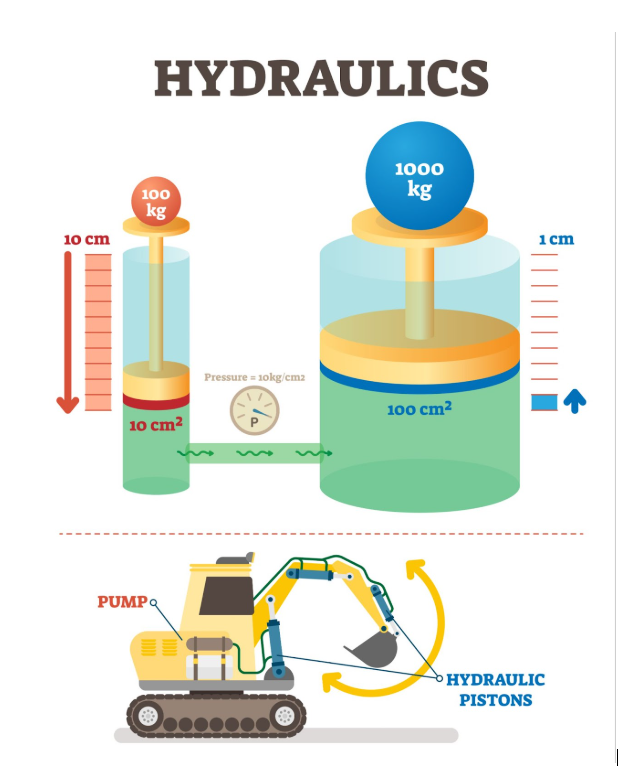
A fundamental scientific concept known as Pascal’s Law is at the heart of every hydraulic system. This principle forms the hydraulic system working principle and states that when pressure is applied to a confined fluid, that pressure is transmitted undiminished in all directions throughout the fluid. In other words, the force you apply to one part of the system travels instantly and evenly to every other part of the system.
This law is what makes hydraulic systems so effective at multiplying force. By applying a small amount of pressure to a narrow piston, you can generate a much larger force on a wider piston elsewhere in the system. This force amplification is central to how a hydraulic power system operates, enabling machines to lift, move, and control heavy loads with efficiency and precision.
A common real-world example of this hydraulic system working principle is found in hydraulic brake systems. When a driver presses the brake pedal, even lightly, the force is transmitted through brake fluid to all four wheels. That small input is enough to activate the brake pads and bring a multi-ton vehicle to a stop.
How Does a Hydraulic System Work?
To understand how a hydraulic system generally works, it helps to follow the process from start to finish. Hydraulic systems are designed to generate, control, and apply force using pressurized fluid in a continuous loop. Here’s how that process unfolds in a typical setup:
It all begins with generating pressure. A hydraulic pump draws fluid from a reservoir and pushes it into the system under pressure. This creates the energy needed to drive the rest of the system.
Next is flow control. As fluid moves through the circuit, hydraulic valves manage its direction, volume, and pressure, ensuring each component receives the correct amount of force at the right time.
From there, power transmission takes place. Pressurized fluid flows through hydraulic hoses, which serve as flexible conduits linking pumps to actuators.
Then comes work output. The fluid reaches actuators such as hydraulic cylinders or motors, which convert fluid power into mechanical motion—whether it’s lifting, pressing, rotating, or pushing.
Finally, there's fluid return. After the work is done, the fluid flows back to the reservoir, where it’s filtered and cooled before beginning the cycle again.
This continuous operation allows hydraulic systems to perform powerful tasks with efficiency, repeatability, and control, making them indispensable across industries that rely on high-performance equipment.
How Does a Hydraulic Press Work Step by Step?
A hydraulic press is a powerful application of fluid power technology that uses pressure to apply force over a surface area. It operates based on the same hydraulic press working principle—transmitting pressure through a confined fluid to perform mechanical work. In this case, that work involves shaping, pressing, or compressing materials with incredible force.
Here’s a step-by-step look at how it functions:
- Step 1: A small piston applies pressure to the hydraulic fluid inside a closed cylinder.
- Step 2: That pressure is transferred through the system to a larger piston located on the opposite side.
- Step 3: Because the larger piston has a greater surface area, the force is amplified and applied to the material being worked on.
This process allows operators to exert tremendous force with minimal input effort, making the hydraulic press essential in many high-force applications.
Hydraulic presses are commonly used in metal fabrication, automotive manufacturing, and industrial stamping operations where precision, consistency, and force are critical for shaping components, forming parts, or removing materials.
Key Components of a Hydraulic System
A hydraulic system is only as effective as the components working together to generate, direct, and apply force. Understanding the function of each part and how they interact is key to maintaining performance and troubleshooting issues. Below are the core components that make up most hydraulic systems.
Hydraulic Pumps
The pump is where it all begins. Hydraulic pumps convert mechanical energy—usually from an electric motor or engine—into hydraulic energy by moving fluid from the reservoir into the system under pressure. Without this pressure, the system wouldn’t have the power to move actuators or perform any work.
Hydraulic Cylinders
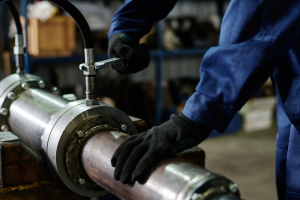
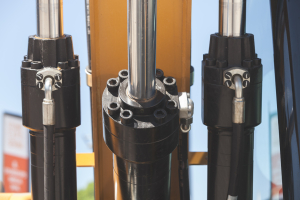
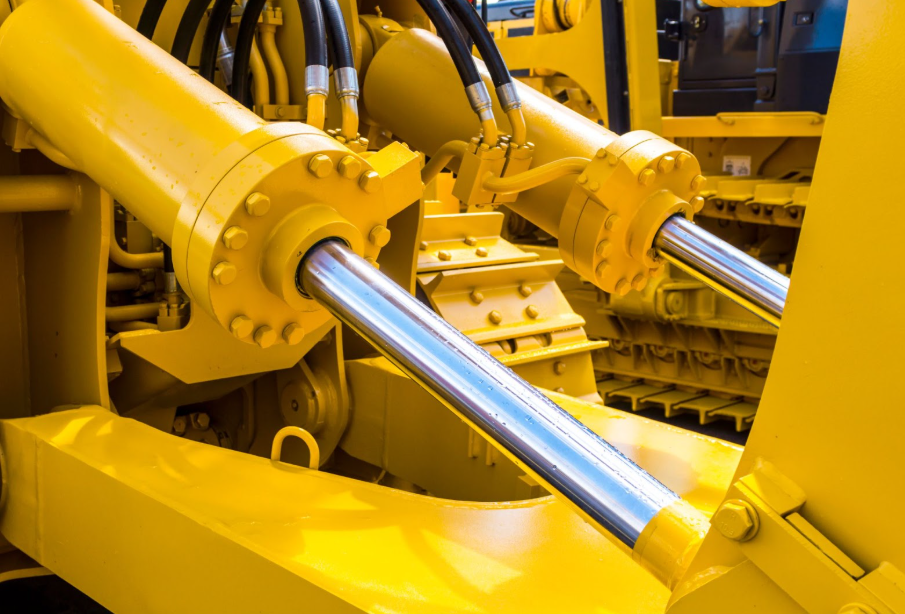
Hydraulic cylinders are linear actuators that take the energy carried by pressurized fluid and transform it into straight-line mechanical motion. They’re commonly used for lifting, pushing, or pulling, such as in loaders, presses, and industrial machines.
Hydraulic Valves
Hydraulic valves control the direction, pressure, and flow rate of the fluid moving through the system. They ensure that the right amount of pressure reaches the correct component at the right time, which is essential for both efficiency and safety.
Hydraulic Hoses
Hydraulic hoses are flexible conduits that carry pressurized fluid between components. They must be durable, secure, and resistant to wear, as they are vital to keeping fluid power moving throughout the system without leaks or failures.
How Do Hydraulics Work on Heavy Equipment?
In industries like construction, mining, and agriculture, hydraulic systems are essential for operating heavy machinery. From excavators and bulldozers to tractors and harvesters, hydraulics deliver the force and precision required to handle demanding tasks in rugged environments.
What makes hydraulics ideal for this equipment is their ability to provide high torque, smooth control, and long-term durability even under continuous, high-load conditions. Unlike mechanical or electrical systems, hydraulics excel in applications where brute force and fine-tuned motion must work hand in hand.
Take a hydraulic excavator as an example. Every movement of the boom, arm, and bucket is driven by hydraulic cylinders working in tandem with hydraulic valves. Operators can precisely control the speed and strength of these movements, enabling efficient digging, lifting, and dumping with just a few joystick inputs.
This same principle applies across various types of heavy equipment, where hydrostatic transmissions and other fluid power components ensure reliable motion, responsive handling, and extended machine life.
Maintaining a Hydraulic System for Longevity
To keep any hydraulic system running at peak performance, consistent maintenance is essential. Whether you're working with mobile equipment or industrial machinery, proactive upkeep can extend component life, reduce downtime, and ensure safety on the job.
One of the most important steps is to check for leaks regularly. Over time, hydraulic hoses and fittings can wear, crack, or loosen, especially in high-pressure environments. Even small leaks can compromise system efficiency and lead to costly repairs if left unchecked.
It's also crucial to use clean hydraulic fluid. Contaminated fluid is one of the leading causes of premature component failure. Regularly replacing or filtering your fluid helps protect sensitive parts like valves, pumps, and cylinders from abrasive particles and moisture.
Lastly, make it a habit to monitor system pressure levels. Using gauges and system accessories, technicians can verify that equipment is operating within safe limits and quickly identify issues before they escalate.
Sticking to a regular maintenance routine not only improves system reliability; it also protects your investment in high-performance hydraulic components.
Find High-Quality Hydraulic Components at Hydraulic Supply Company
A well-designed hydraulic system starts with quality components and maintaining that system over time depends on reliable parts, expert support, and easy access to replacements. Whether you’re building new equipment or keeping your existing machinery running smoothly, investing in high-performance hydraulic products can make all the difference in safety, efficiency, and uptime.
At Hydraulic Supply Company, we offer one of the most comprehensive selections of hydraulic components in the industry, backed by decades of expertise and customer-focused service. Our team can help you source the right parts, solve system challenges, and keep your operations moving without interruption.
Looking for something specific? Browse our product categories or visit one of our store locations to speak with a hydraulic specialist today.

Share on Facebook

Share on X

Share on Pinterest
Quick Add Product
Account Summary
Short Code:
Credit Limit:
Current Balance:
Recent Posts