-
All Products
- Hydraulic Power Systems & Components
- Hydraulic Pumps & Accessories
- Hydraulic Motors & Accessories
- Hydrostatic Transmissions
- Cylinders & Accessories
- Steering Units & Accessories
- Hydraulic Valves & Accessories
- Ball Valves
- Check Valves
- Check Valves (Pilot-Operated)
- Counterbalance Valves (Overcenter Valves)
- Cushion Valves (Double Relief Valves)
- Directional Control Valves
- Flow Control Valves
- Flow Divider Valves
- Gate Valves
- Shop Logic Element Valves
- Needle Valves
- Plug Valves
- Pressure Reducing Valves
- Relief Valves
- Shop Sandwich Valves
- Premium Selector Valves
- Hydraulic Filters & Accessories
- Power Units
- System Accessories
- High Force Hydraulics
- Hydraulic Pumps & Accessories
- Pneumatic Power & Control
- Fluid Conveying
- Hose Products
- Tubing Products
- Piping Products
- Adapters
- Steel
- O-Ring Face Seal Braze Adapters
- O-Ring Face Seal To Straight Thread O-Ring
- O-Ring Face Seal To Pipe
- O-Ring Face Seal To 37° Flare
- O-Ring Face Seal To O-Ring Face Seal
- O-Ring Face Seal Accessories
- Pipe To Pipe
- Pipe to 37° Flare
- Pipe To Straight Thread O-Ring
- Pipe To Hose
- 37° Flare Union
- Straight Thread O-Ring to 37° Flare
- Straight Thread O-Ring to Straight Thread O-Ring
- Straight Thread O-Ring to Hose
- SAE Split Flange To 37° Flare
- SAE Split Flange To O-Ring Face Seal
- Braze & Weld to 37° Flare
- 42° Inverted Flare to 37° Flare
- Restrictor
- Metric to 37° Flare
- Metric to Pipe
- Metric
- BSPP to 37° Flare
- BSPP to Pipe
- BSPP to Metric
- BSPP to BSPT
- BSPP
- BSPT To Pipe
- BSPT To 37° Flare
- JIS
- JIS 30° Seat (BSPP Thread) To 37° Flare
- Komatsu, Kobelco
- Stainless Steel
- Brass
- Steel
- Hydraulic Quick Disconnects
- Miscellaneous Fluid Conveying Parts
- Performance Parts
- Hose
- Adapters
- Brake System Adapters
- Fuel System Components
- Couplings
- PRO CLAMP and Overbraid
- Accessories
- Reusable Fittings for AQP & Starlite Racing Hose
- Crimp Fittings for AQP & Starlite Racing Hose
- Fittings for AQP Socketless Hose
- Reusable Fittings for Aeroquip FBF A/C Hose
- Fittings for Teflon Racing Hose
- Reusable Fittings for AQP High Pressure Hose
- Assembly Equipment
- Hose Products
- Other Products
- Seals
- Control Cables
- Thread Sealants
- Gloves
- Hand Tools
- Pressure Washer Products for Industrial & Commercial Use
- Hose Reels
- Winches
- Peel Press Drive
- Hydraulic Fluids & Oils for Industrial Systems
- Industrial Chemical Maintenance Products
- Lubrication Equipment & Accessories
- Cable Hardware & Knobs
- Cable Remote Controls
- Industrial Corrosion Inhibitors
- Y Strainer
- Hydraulic Power Systems & Components
- Services
- Branch Locations
- Catalogs
- Quick Order
- Help
What to Know Before Replacing a Hydraulic Cylinder
Published March 24, 2026 | Last Updated March 25, 2026
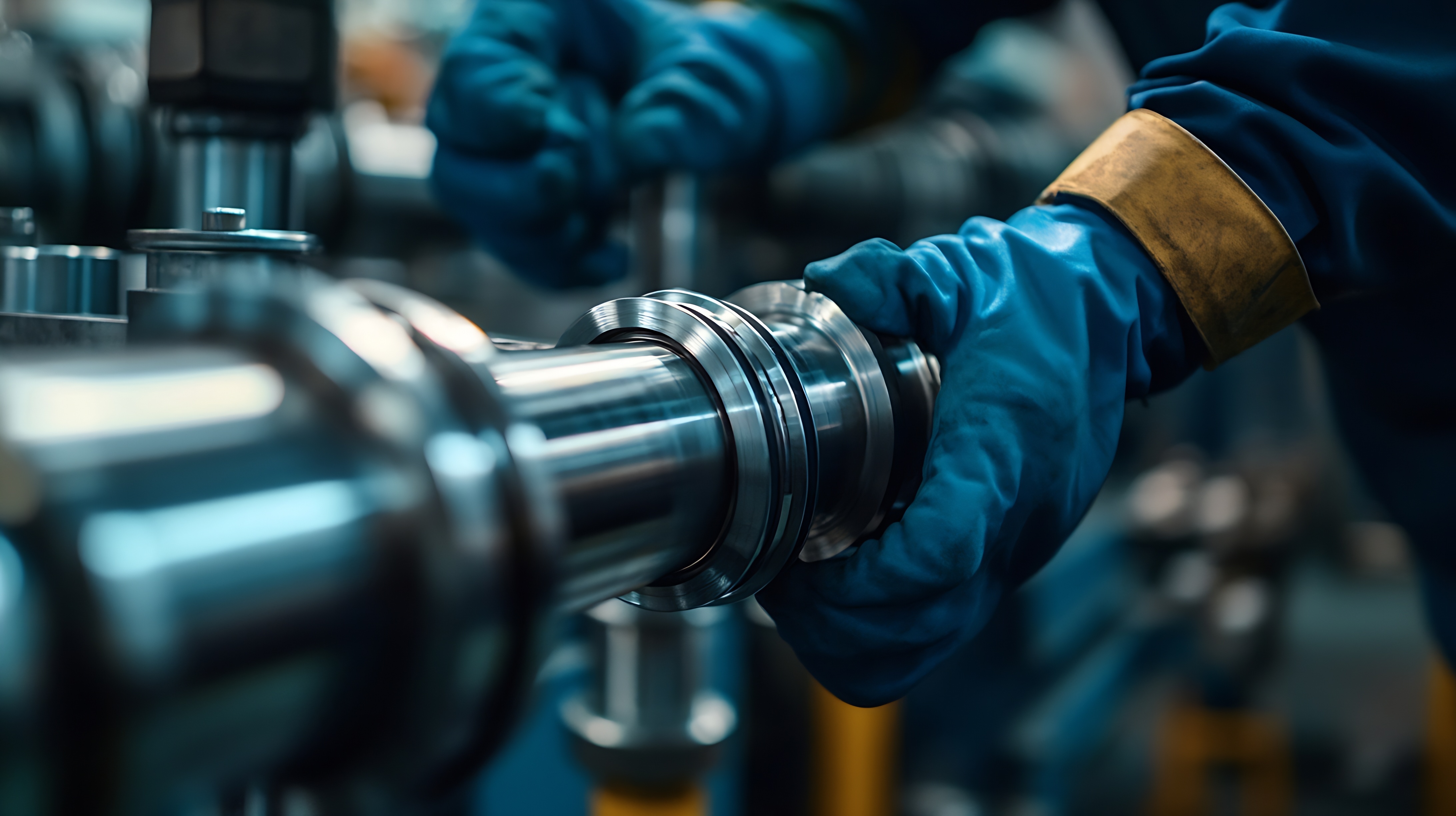
Replacing a hydraulic cylinder is not always as simple as swapping out one part for another. Before sourcing a replacement, it is important to confirm the cylinder’s measurements, mounting style, pressure requirements, and overall condition. Overlooking key details at this stage can lead to installation issues or shortened service life after the new cylinder is in place.
This guide covers what to understand before moving forward with a replacement, including how to identify the right cylinder, what measurements matter, and when repair may be a better option. The goal is to help you gather the right information before ordering so you can avoid delays, rework, or performance issues.
What to Check Before Replacing a Hydraulic Cylinder
Before removing the existing cylinder, it is worth evaluating how and why the failure occurred, since not every issue requires a full replacement. Leakage or reduced performance is often tied to seal degradation, whereas structural issues such as rod deformation or barrel scoring typically indicate that replacement will be the more reliable option.
It is also important to confirm that the installed cylinder still reflects the original equipment requirements, as many machines in the field have been fitted with near-equivalent components over time. Using the existing unit as a reference without validating its specifications can introduce errors that carry through the replacement process.
At this stage, the focus should remain on how the cylinder operates within the system, including its required stroke, mounting geometry, and integration with the hydraulic circuit. Operating conditions and duty cycle should also be taken into account, particularly in mobile or high-cycle applications where wear patterns develop quickly, and tolerances matter.
How to Find a Replacement Hydraulic Cylinder
Sourcing a replacement hydraulic cylinder begins with identifying the original specifications wherever possible, since a part number or manufacturer reference provides the most direct path to a match. When that information is not available, the process shifts to comparing functional and dimensional characteristics to ensure compatibility.
The key parameters to verify include:
-
bore size and stroke length, which determine force output and travel
-
rod diameter, which influences strength and resistance to buckling
-
mounting configuration, which affects alignment and load transfer
-
port size and type, which must integrate with the existing hydraulic system
Even minor differences in these areas can affect long-term performance, since a cylinder that installs successfully may still introduce side loading, inefficient operation, or accelerated wear if it does not match the application closely enough.
When an exact match cannot be identified, working with a supplier that can cross-reference specifications or recommend alternatives becomes especially valuable, particularly in operations where uptime and consistency are critical.
How to Measure a Hydraulic Cylinder for Replacement
If the original specifications are not available, measurement becomes the next step. This is often where replacement efforts run into trouble, since cylinders that appear similar can still differ in ways that affect installation or performance.
Rather than relying on visual comparison, measurements should be taken directly from the cylinder in its current state. This typically means confirming dimensions with the rod both retracted and extended, as well as checking mounting points in place on the equipment. Wear, modifications, or previous repairs can all affect what you are measuring, so it is important to account for how the cylinder is actually functioning in the system, not just how it looks.
It is also common to run into situations where certain dimensions are difficult to access or verify in the field. In those cases, partial measurements combined with application details can often be used to identify a correct replacement, especially when working with a supplier that can cross-reference specifications.
When there is uncertainty, it is usually more efficient to validate measurements upfront than to correct issues after installation. Fitment problems, alignment issues, and connection mismatches are often traced back to small measurement gaps during this stage.
How to Replace a Hydraulic Cylinder
The replacement process itself will vary depending on the equipment, but the same general considerations apply across most systems. The focus should be on safety, system cleanliness, and proper alignment rather than speed.
Typical replacement flow
Depressurize the system before removal.
Hydraulic systems can retain stored pressure even when equipment is powered down, so releasing that pressure safely is a necessary first step.
Disconnect hydraulic lines with care.
Lines should be removed in a way that limits fluid loss and prevents contamination. Keeping connections clean during this step helps protect the rest of the system.
Remove the existing cylinder with proper support.
Depending on the application, the cylinder may be under load or positioned in a way that requires controlled removal to avoid damage or injury.
Install the replacement cylinder with attention to alignment.
The cylinder should fit into place without being forced. Misalignment at installation often leads to uneven wear and reduced service life.
Reconnect the system and verify operation.
Once installed, cycle the system and check for leaks, binding, or inconsistent movement before returning the equipment to full use.
For more complex systems or equipment with limited access, it may make sense to involve experienced technicians to ensure the replacement is completed correctly.
Making the Right Replacement Decision
Replacing a hydraulic cylinder comes down to understanding what you have before you try to replace it. Knowing the specifications, confirming measurements, and recognizing whether the issue is wear or structural damage all help avoid downtime and rework once installation begins. When that information is not clear, the process can slow down quickly. Having the right support makes it easier to identify the correct replacement and move forward with confidence.
Hydraulic Supply Company carries a wide selection of hydraulic cylinders to fit a range of equipment and applications. Whether you know exactly what you need or are still working through the details, we have the inventory and the expertise to get you to the right answer.
Browse our hydraulic cylinder inventory to find your replacement, or contact our team for additional support, and we'll help you identify the correct part and get your equipment back up and running.
Frequently Asked Questions
How Do I Know If My Hydraulic Cylinder Needs to Be Replaced or Repaired?
Minor issues such as seal leaks or reduced performance can often be repaired. However, visible damage like a bent rod, scored barrel, or repeated failure typically indicates that replacement is the more reliable long-term solution.
What Measurements Are Required to Replace a Hydraulic Cylinder?
The most critical measurements include bore size, stroke length, rod diameter, mounting type, and port size. These dimensions ensure the replacement cylinder will function correctly within your system.
Can I Replace a Hydraulic Cylinder with a Different Size?
Using a different size is not recommended unless it has been properly evaluated. Even small changes in bore or stroke can impact force output, cycle timing, and system performance, potentially leading to equipment damage.
How Long Does It Take to Replace a Hydraulic Cylinder?
Replacement time varies depending on equipment accessibility and system complexity. In straightforward applications, it may take a few hours, while more complex systems may require additional time and technical support.
What Causes Hydraulic Cylinders to Fail?
Common causes include seal wear, contamination, improper alignment, excessive side loading, and operating beyond rated pressure. Identifying the root cause helps prevent repeated failures after replacement.
What Happens If the Replacement Cylinder Is Slightly Misaligned?
Misalignment can lead to uneven wear, seal damage, and premature failure. Proper alignment during installation is critical to maintaining performance and extending service life.

Share on Facebook

Share on X

Share on Pinterest
Quick Add Product
Account Summary
Short Code:
Credit Limit:
Current Balance:
Recent Posts