
-
All Products
- Hydraulic Power Systems & Components
- Hydraulic Pumps & Accessories
- Hydraulic Motors & Accessories
- Hydrostatic Transmissions
- Cylinders & Accessories
- Steering Units & Accessories
- Hydraulic Valves & Accessories
- Ball Valves
- Check Valves
- Check Valves (Pilot-Operated)
- Counterbalance Valves (Overcenter Valves)
- Cushion Valves (Double Relief Valves)
- Directional Control Valves
- Flow Control Valves
- Flow Divider Valves
- Gate Valves
- Shop Logic Element Valves
- Needle Valves
- Plug Valves
- Pressure Reducing Valves
- Relief Valves
- Shop Sandwich Valves
- Premium Selector Valves
- Hydraulic Filters & Accessories
- Power Units
- System Accessories
- High Force Hydraulics
- Hydraulic Pumps & Accessories
- Pneumatic Power & Control
- Fluid Conveying
- Hose Products
- Tubing Products
- Piping Products
- Adapters
- Steel
- O-Ring Face Seal Braze Adapters
- O-Ring Face Seal To Straight Thread O-Ring
- O-Ring Face Seal To Pipe
- O-Ring Face Seal To 37° Flare
- O-Ring Face Seal To O-Ring Face Seal
- O-Ring Face Seal Accessories
- Pipe To Pipe
- Pipe to 37° Flare
- Pipe To Straight Thread O-Ring
- Pipe To Hose
- 37° Flare Union
- Straight Thread O-Ring to 37° Flare
- Straight Thread O-Ring to Straight Thread O-Ring
- Straight Thread O-Ring to Hose
- SAE Split Flange To 37° Flare
- SAE Split Flange To O-Ring Face Seal
- Braze & Weld to 37° Flare
- 42° Inverted Flare to 37° Flare
- Restrictor
- Metric to 37° Flare
- Metric to Pipe
- Metric
- BSPP to 37° Flare
- BSPP to Pipe
- BSPP to Metric
- BSPP to BSPT
- BSPP
- BSPT To Pipe
- BSPT To 37° Flare
- JIS
- JIS 30° Seat (BSPP Thread) To 37° Flare
- Komatsu, Kobelco
- Stainless Steel
- Brass
- Steel
- Hydraulic Quick Disconnects
- Miscellaneous Fluid Conveying Parts
- Performance Parts
- Hose
- Adapters
- Brake System Adapters
- Fuel System Components
- Couplings
- PRO CLAMP and Overbraid
- Accessories
- Reusable Fittings for AQP & Starlite Racing Hose
- Crimp Fittings for AQP & Starlite Racing Hose
- Fittings for AQP Socketless Hose
- Reusable Fittings for Aeroquip FBF A/C Hose
- Fittings for Teflon Racing Hose
- Reusable Fittings for AQP High Pressure Hose
- Assembly Equipment
- Hose Products
- Other Products
- Seals
- Control Cables
- Thread Sealants
- Gloves
- Hand Tools
- Pressure Washer Products for Industrial & Commercial Use
- Hose Reels
- Winches
- Peel Press Drive
- Hydraulic Fluids & Oils for Industrial Systems
- Industrial Chemical Maintenance Products
- Lubrication Equipment & Accessories
- Cable Hardware & Knobs
- Cable Remote Controls
- Industrial Corrosion Inhibitors
- Y Strainer
- Hydraulic Power Systems & Components
- Services
- Branch Locations
- Catalogs
- Quick Order
- Help
Hydraulic Heat Exchangers
Most hydraulic systems utilize a heat exchanger as a way to expel heat generated by the equipment. Should heat generation exceed the radiation rate of the system, accumulated heat can cook the oil, create oil decomposition, form varnish on component surfaces and begin deteriorating the system seals. When looking for a reliable supplier of heat exchangers from the top brands in your industry, Hydraulic Supply Company is your choice. Heat exchangers play a key role in maintaining oil viscosity, preventing component wear, and improving overall system efficiency. Our selection of products includes: Mobile and Industrial Air /Oil Heat Exchangers and Mobile and Industrial Water/Oil Heat Exchangers.
-
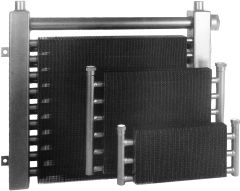 DH & DHR Series Air Cooled Mobile Heat Exchangers, Up To 300 PSI
Product is currently not available online.
Please call 800-507-9651 for assistance. -
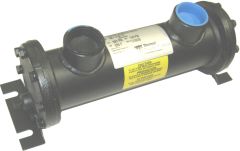 EK Series Water Cooled Industrial Heat Exchangers, Up To 400 HP Heat Removal
Product is currently not available online.
Please call 800-507-9651 for assistance. -
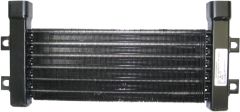 M & MR Series Air Cooled Mobile Heat Exchangers, Up To 90000 BTU/hr Heat Removal
Product is currently not available online.
Please call 800-507-9651 for assistance. -
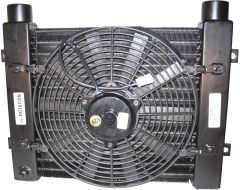 MF Series Air Cooled Powered Fan Mobile Heat Exchangers, Up To 50000 BTU/hr Heat Removal
Product is currently not available online.
Please call 800-507-9651 for assistance. -
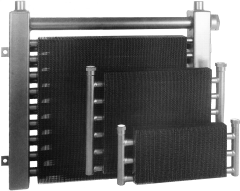 DH & DHR Series Air Cooled Mobile Heat Exchanger, 3/4 NPT Ports, 2.47 sq ft Face Area
Product is currently not available online.
Please call 800-507-9651 for assistance. -
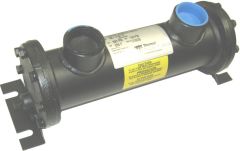 EK Series Water Cooled Industrial Heat Exchanger, 2-Pass, Copper Tube, Oil (M): 1-1/2 NPT, Water (N): 3/4 NPT Ports
Product is currently not available online.
Please call 800-507-9651 for assistance. -
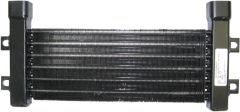 M & MR Series Air Cooled Mobile Heat Exchanger, 1 NPT Ports, 1.21 sq ft Face Area
Product is currently not available online.
Please call 800-507-9651 for assistance. -
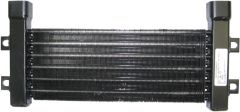 M & MR Series Air Cooled Mobile Heat Exchanger, 1-1/4 NPT Ports, 3.25 sq ft Face Area
Product is currently not available online.
Please call 800-507-9651 for assistance. -
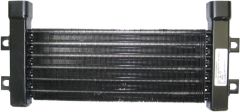 M & MR Series Air Cooled Mobile Heat Exchanger, SAE-16 Ports, 0.81 sq ft Face Area
Product is currently not available online.
Please call 800-507-9651 for assistance. -
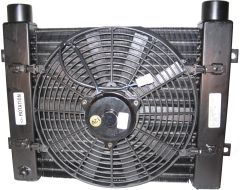 MF Series Air Cooled Powered Fan Mobile Heat Exchanger, 1-1/2 NPT Ports, 12VDC Motor
Product is currently not available online.
Please call 800-507-9651 for assistance.
My Wish List
Last Added Items

You have no items in your wish list.
Quick Add Product
Account Summary
Short Code:
Credit Limit:
Current Balance:
Understanding Hydraulic Heat Exchanger Performance
Hydraulic heat exchangers regulate fluid temperature to prevent overheating and extend the life of system components. When selecting a model, buyers should compare cooling capacity, measured in BTU/hr or horsepower heat removal, and confirm compatibility with the system’s flow rate and pressure. Oil-to-air exchangers use ambient airflow for cooling, while oil-to-water units use a secondary fluid circuit for higher heat transfer efficiency in fixed installations. Selecting the correct configuration ensures optimal performance across mobile, industrial, and marine hydraulic systems.
For more information about system applications, visit our industry pages for construction, agriculture, and mining.
FAQs
What Is the Difference Between an Air-Cooled and Water-Cooled Hydraulic Heat Exchanger?
Air-cooled exchangers use ambient air to dissipate heat from hydraulic oil, while water-cooled units use a coolant loop for faster, more efficient heat removal in stationary or closed systems.
How Do Hydraulic Heat Exchangers Improve System Performance?
By maintaining consistent fluid temperature, hydraulic heat exchangers help prevent oil oxidation, reduce seal wear, and maintain stable pressure and flow characteristics for improved system efficiency.
What Factors Should Be Considered When Sizing a Hydraulic Heat Exchanger?
Key factors include oil flow rate, inlet temperature, desired outlet temperature, and available airflow or coolant supply. Choosing the right size ensures sufficient heat removal without creating excess back pressure.
When Should a Hydraulic Heat Exchanger Be Serviced or Replaced?
Service intervals depend on environmental conditions and operating hours. Units exposed to dust, debris, or heavy use should be inspected regularly for clogged fins, leaks, or reduced cooling efficiency.
Does Hydraulic Supply Company Offer Support for Heat Exchanger Selection and Service?
Yes, our team provides product selection guidance, technical support, and repair services to help maintain your hydraulic cooling systems. For assistance, visit our repair service page.