-
All Products
- Hydraulic Power Systems & Components
- Hydraulic Pumps & Accessories
- Hydraulic Motors & Accessories
- Hydrostatic Transmissions
- Cylinders & Accessories
- Steering Units & Accessories
- Hydraulic Valves & Accessories
- Ball Valves
- Check Valves
- Check Valves (Pilot-Operated)
- Counterbalance Valves (Overcenter Valves)
- Cushion Valves (Double Relief Valves)
- Directional Control Valves
- Flow Control Valves
- Flow Divider Valves
- Gate Valves
- Shop Logic Element Valves
- Needle Valves
- Plug Valves
- Pressure Reducing Valves
- Relief Valves
- Shop Sandwich Valves
- Premium Selector Valves
- Hydraulic Filters & Accessories
- Power Units
- System Accessories
- High Force Hydraulics
- Hydraulic Pumps & Accessories
- Pneumatic Power & Control
- Fluid Conveying
- Hose Products
- Tubing Products
- Piping Products
- Adapters
- Steel
- O-Ring Face Seal Braze Adapters
- O-Ring Face Seal To Straight Thread O-Ring
- O-Ring Face Seal To Pipe
- O-Ring Face Seal To 37° Flare
- O-Ring Face Seal To O-Ring Face Seal
- O-Ring Face Seal Accessories
- Pipe To Pipe
- Pipe to 37° Flare
- Pipe To Straight Thread O-Ring
- Pipe To Hose
- 37° Flare Union
- Straight Thread O-Ring to 37° Flare
- Straight Thread O-Ring to Straight Thread O-Ring
- Straight Thread O-Ring to Hose
- SAE Split Flange To 37° Flare
- SAE Split Flange To O-Ring Face Seal
- Braze & Weld to 37° Flare
- 42° Inverted Flare to 37° Flare
- Restrictor
- Metric to 37° Flare
- Metric to Pipe
- Metric
- BSPP to 37° Flare
- BSPP to Pipe
- BSPP to Metric
- BSPP to BSPT
- BSPP
- BSPT To Pipe
- BSPT To 37° Flare
- JIS
- JIS 30° Seat (BSPP Thread) To 37° Flare
- Komatsu, Kobelco
- Stainless Steel
- Brass
- Steel
- Hydraulic Quick Disconnects
- Miscellaneous Fluid Conveying Parts
- Performance Parts
- Hose
- Adapters
- Brake System Adapters
- Fuel System Components
- Couplings
- PRO CLAMP and Overbraid
- Accessories
- Reusable Fittings for AQP & Starlite Racing Hose
- Crimp Fittings for AQP & Starlite Racing Hose
- Fittings for AQP Socketless Hose
- Reusable Fittings for Aeroquip FBF A/C Hose
- Fittings for Teflon Racing Hose
- Reusable Fittings for AQP High Pressure Hose
- Assembly Equipment
- Hose Products
- Other Products
- Seals
- Control Cables
- Thread Sealants
- Gloves
- Hand Tools
- Pressure Washer Products for Industrial & Commercial Use
- Hose Reels
- Winches
- Peel Press Drive
- Hydraulic Fluids & Oils for Industrial Systems
- Industrial Chemical Maintenance Products
- Lubrication Equipment & Accessories
- Cable Hardware & Knobs
- Cable Remote Controls
- Industrial Corrosion Inhibitors
- Y Strainer
- Hydraulic Power Systems & Components
- Services
- Branch Locations
- Catalogs
- Quick Order
- Help
Types of Hydraulic Motors Explained
Published January 07, 2026 | Last Updated January 19, 2026
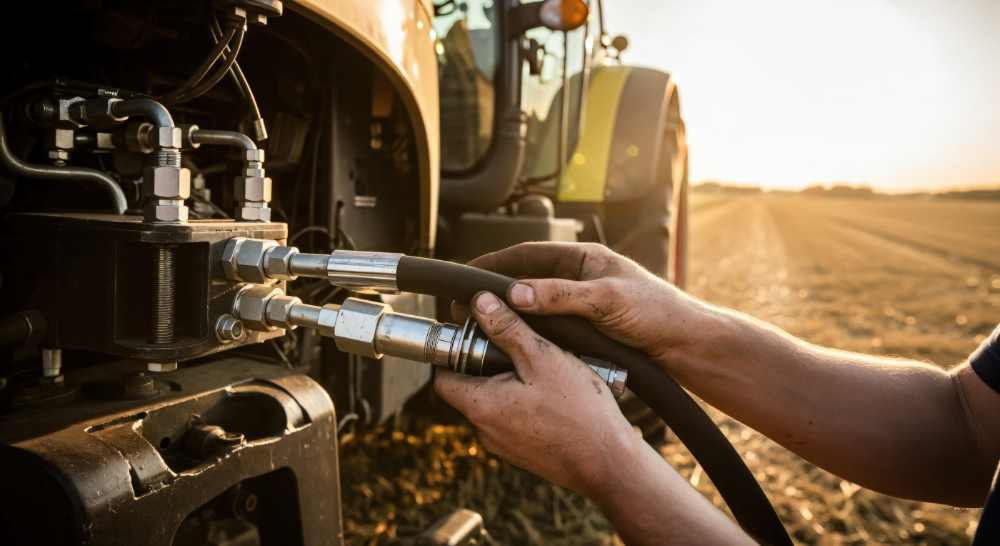
Hydraulic motors are critical components in fluid power systems, converting hydraulic energy into mechanical energy to drive equipment. Whether it's powering a conveyor in a factory, rotating an auger on a skid steer, or running a winch on a marine vessel, these motors are essential for delivering reliable torque and motion. However, not all motors are created equal. Understanding the different types of hydraulic motors helps ensure you choose the right design for your performance, efficiency, and durability requirements.
Selecting the wrong hydraulic motor can lead to suboptimal system performance, overheating, reduced torque output, or even premature failure. That's why it’s vital to understand the key differences in motor types before making a selection.
This blog will guide you through the various types of hydraulic motors and explain how each one suits specific equipment needs. To get started, explore our full selection of hydraulic motors and find the right option for your application.
The Main Types of Hydraulic Motors
The most common hydraulic motor types include gear, geroler, geroter, piston, and vane motors. Each design is engineered to meet specific application demands related to torque, displacement, speed, and environmental conditions. Hydraulic Supply Company offers a wide range of options for replacement and new equipment builds.
Gear Hydraulic Motors
Gear motors use two interlocking gears to generate rotational force. As fluid flows into the motor, it causes the gears to turn, producing mechanical output.
These motors are valued for their durability, simplicity, and relatively low cost. Their design allows them to function reliably even in contaminated or rugged environments where more sensitive motors might fail. While they may not offer the same level of efficiency or quiet performance as piston or vane motors, gear motors are often a preferred choice for simpler systems and rugged conditions.
Common applications: Agricultural equipment, compact conveyors, mobile machinery, and small industrial systems.
Geroler Hydraulic Motors
Geroler motors include roller elements between the rotor and stator, which reduce friction and allow for smoother, low-speed performance compared to gear designs.
They offer higher starting torque and a longer service life, making them ideal for continuous or demanding operations. These motors tend to be more efficient than standard gear or geroter motors at low speeds, and they operate with less vibration. These motors perform best in systems with well-maintained fluid and are often a worthwhile investment for equipment that demands smooth, reliable torque at low speeds.
Common applications: Sweepers, augers, skid-steer attachments, forestry machines, and low-speed industrial tools.
Explore geroler hydraulic motors
Geroter Hydraulic Motors
Geroter motors use an internal gear set with an eccentric motion to deliver fluid displacement. They are simpler in construction and more affordable than geroler motors and are ideal for systems with moderate demands, clean hydraulic fluid, and limited installation space. While similar in appearance to geroler designs, they lack roller elements, which makes them more cost-effective but less efficient at low speeds.
They are compact and provide consistent torque in medium-duty systems.
Common applications: Food processing systems, light conveyors, agricultural implements, and other low-speed industrial machinery.
Explore geroter hydraulic motors
Piston Hydraulic Motors
Piston motors feature multiple pistons arranged either axially or radially around a shaft. Pressurized fluid moves these pistons, converting energy into powerful rotation.
These motors are the most efficient type of hydraulic motor, capable of producing high torque under extreme load conditions. They are ideal for variable displacement systems and applications requiring precise speed and force control. They do require clean hydraulic fluid and proper filtration to operate at peak performance, making system maintenance an important consideration. Pressurized fluid moves these pistons, converting energy into powerful rotation.
These motors are the most efficient type of hydraulic motor, capable of producing high torque under extreme load conditions. They are also excellent for variable displacement control.
Common applications: Excavators, drilling rigs, industrial presses, winches, and large-scale hydraulic systems.
Vane Hydraulic Motors
Vane motors use a series of sliding vanes within a rotating cavity. As pressurized fluid enters the chamber, the vanes slide outward, creating expanding chambers that drive rotation.
These motors provide smooth, quiet operation and are ideal for consistent mid-speed applications. They offer moderate efficiency and are relatively compact. Vane motors are especially favored in industrial settings where noise levels must be minimized. They are best suited for systems with consistent pressure and clean operating conditions to ensure long-term performance. When pressurized fluid enters the chamber, the vanes slide outward, creating expanding chambers that drive rotation.
These motors provide smooth, quiet operation and are ideal for consistent mid-speed applications.
Common applications: Mixers, injection molding systems, and precision automation machinery.
How to Choose the Right Hydraulic Motor Type
Selecting the right hydraulic motor comes down to matching the motor's specifications with your system requirements. Consider these key factors:
-
Torque output: Required torque at startup and during operation.
-
Speed range: Desired RPM range and whether speed needs to be adjustable.
-
Displacement: Measured in cubic centimeters (cc), this affects flow and speed.
-
System pressure: Maximum pressure your hydraulic system can deliver.
-
Duty cycle: Whether the application is intermittent or continuous.
-
Environment: Conditions such as dust, debris, or moisture.
-
Budget constraints: Balancing performance with cost-effectiveness.
Matching these criteria with OEM recommendations ensures optimal performance. If you're unsure which motor best fits your system, our technical team can help. Simply reach out through our online support form.
When You Should Replace a Hydraulic Motor
Hydraulic motors wear out over time. Knowing when to replace one can prevent costly downtime and system damage. Signs your motor may need replacement include:
-
Loss of torque or slow startup
-
Overheating or fluid leakage
-
Jerky or inconsistent rotation
-
Unusual noise or vibration
-
Reduced system efficiency
If repairs are frequent or cost more than a replacement, it’s often more economical to install a new motor. Replacing a failing unit can also extend the lifespan of other connected components.
Reliable Hydraulic Motors and Accessories
Hydraulic Supply Company offers over 270 motor options across all five major types of hydraulic motors. Our inventory includes motors for light, medium, and heavy-duty applications, along with essential accessories like mounting brackets, shaft adapters, and fittings.
Since 1947, our commitment to quality and technical support has helped professionals across industries—from construction to agriculture—keep their equipment running smoothly.
Learn more about Hydraulic Supply Company's history, expertise, and commitment to supporting professionals across industries by visiting our company overview.
Frequently Asked Questions
What Does cc Mean in a Hydraulic Motor?
“cc” stands for cubic centimeters and refers to the motor’s displacement—the volume of fluid it can move per revolution. Higher displacement generally means more torque and slower speed.
What Type of Motor Is Most Commonly Used in Hydrostatic Systems?
Piston hydraulic motors are most common in hydrostatic systems due to their high efficiency, precision, and ability to handle variable speeds and loads.
What Do P and T Stand for in Hydraulics?
“P” typically refers to the pressure port (inlet), while “T” refers to the tank port (return). These labels help identify fluid flow direction.
What Type of Hydraulic Motor Is Most Efficient?
Piston motors are considered the most efficient, especially in high-pressure and high-performance environments. They provide precise control and high torque.

Share on Facebook

Share on X

Share on Pinterest
Quick Add Product
Account Summary
Short Code:
Credit Limit:
Current Balance:
Recent Posts