
-
All Products
- Hydraulic Power Systems & Components
- Hydraulic Pumps & Accessories
- Hydraulic Motors & Accessories
- Hydrostatic Transmissions
- Cylinders & Accessories
- Steering Units & Accessories
- Hydraulic Valves & Accessories
- Ball Valves
- Check Valves
- Check Valves (Pilot-Operated)
- Counterbalance Valves (Overcenter Valves)
- Cushion Valves (Double Relief Valves)
- Directional Control Valves
- Flow Control Valves
- Flow Divider Valves
- Gate Valves
- Shop Logic Element Valves
- Needle Valves
- Plug Valves
- Pressure Reducing Valves
- Relief Valves
- Shop Sandwich Valves
- Premium Selector Valves
- Hydraulic Filters & Accessories
- Power Units
- System Accessories
- High Force Hydraulics
- Hydraulic Pumps & Accessories
- Pneumatic Power & Control
- Fluid Conveying
- Hose Products
- Tubing Products
- Piping Products
- Adapters
- Steel
- O-Ring Face Seal Braze Adapters
- O-Ring Face Seal To Straight Thread O-Ring
- O-Ring Face Seal To Pipe
- O-Ring Face Seal To 37° Flare
- O-Ring Face Seal To O-Ring Face Seal
- O-Ring Face Seal Accessories
- Pipe To Pipe
- Pipe to 37° Flare
- Pipe To Straight Thread O-Ring
- Pipe To Hose
- 37° Flare Union
- Straight Thread O-Ring to 37° Flare
- Straight Thread O-Ring to Straight Thread O-Ring
- Straight Thread O-Ring to Hose
- SAE Split Flange To 37° Flare
- SAE Split Flange To O-Ring Face Seal
- Braze & Weld to 37° Flare
- 42° Inverted Flare to 37° Flare
- Restrictor
- Metric to 37° Flare
- Metric to Pipe
- Metric
- BSPP to 37° Flare
- BSPP to Pipe
- BSPP to Metric
- BSPP to BSPT
- BSPP
- BSPT To Pipe
- BSPT To 37° Flare
- JIS
- JIS 30° Seat (BSPP Thread) To 37° Flare
- Komatsu, Kobelco
- Stainless Steel
- Brass
- Steel
- Hydraulic Quick Disconnects
- Miscellaneous Fluid Conveying Parts
- Performance Parts
- Hose
- Adapters
- Brake System Adapters
- Fuel System Components
- Couplings
- PRO CLAMP and Overbraid
- Accessories
- Reusable Fittings for AQP & Starlite Racing Hose
- Crimp Fittings for AQP & Starlite Racing Hose
- Fittings for AQP Socketless Hose
- Reusable Fittings for Aeroquip FBF A/C Hose
- Fittings for Teflon Racing Hose
- Reusable Fittings for AQP High Pressure Hose
- Assembly Equipment
- Hose Products
- Other Products
- Seals
- Control Cables
- Thread Sealants
- Gloves
- Hand Tools
- Pressure Washer Products for Industrial & Commercial Use
- Hose Reels
- Winches
- Peel Press Drive
- Hydraulic Fluids & Oils for Industrial Systems
- Industrial Chemical Maintenance Products
- Lubrication Equipment & Accessories
- Cable Hardware & Knobs
- Cable Remote Controls
- Industrial Corrosion Inhibitors
- Y Strainer
- Hydraulic Power Systems & Components
- Services
- Branch Locations
- Catalogs
- Quick Order
- Help
Pneumatic Cylinders
Explore our extensive range of pneumatic cylinders and actuators, designed for reliability and efficiency across various industrial applications. From compact stainless steel air cylinders to robust pneumatic actuators, our selection caters to every need. Whether you're looking for SMC pneumatics, pneumatic rams, or specific pneumatic piston solutions, our products ensure optimal performance. Our pneumatic cylinders are engineered for precision and durability, offering seamless integration with your existing systems. Ideal for automation, our cylinders are available to provide the force and speed required for your operations, making them a versatile choice for any pneumatic system.
-
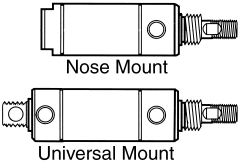 Silverair Series Double-Acting Pneumatic Cylinders, Up To 200 PSI
Product is currently not available online.
Please call 800-507-9651 for assistance. -
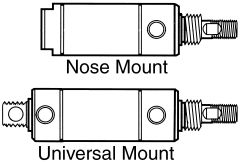 Silverair Series Double-Acting Pneumatic Cylinder, Universal Mount, 2.00 Inch Bore, 0.63 Inch Rod, 6.00 Inch Stroke, 1/4 NPT Ports
Product is currently not available online.
Please call 800-507-9651 for assistance.
My Wish List
Last Added Items

You have no items in your wish list.
Quick Add Product
Account Summary
Short Code:
Credit Limit:
Current Balance:
Rodless, Double-acting, and More
Our comprehensive collection of pneumatic cylinders and actuators is designed to meet the diverse needs of industrial automation. With a focus on innovation and quality, we offer a wide array of pneumatic solutions, including piston rod cylinders, rodless cylinders, compact and guided actuators, and specialty cylinders tailored for specific applications. Our products are crafted to provide reliable linear or rotary motion, utilizing compressed air for efficient operation. Pneumatic cylinders, known for their simplicity and ease of installation, are an essential component in numerous applications, from manufacturing lines to packaging machinery. They offer a cost-effective and energy-efficient alternative to electric or hydraulic systems, with the added benefits of clean operation and minimal maintenance. Our range includes double-acting cylinders for higher force output and single acting cylinders for simpler, space-saving designs. We also specialize in pneumatic actuators that convert the energy of compressed air into mechanical motion. These actuators are ideal for applications requiring precise control over movement, speed, and force. With options for adjustable cushioning and various mounting configurations, our actuators ensure smooth operation and extended service life. Our pneumatic cylinders and actuators are compatible with a wide range of fittings and accessories, allowing for easy customization and integration into your existing systems. Whether you need a solution for pushing, pulling, lifting, or holding, our pneumatic components are engineered to perform under the most demanding conditions, providing reliable performance and exceptional value.
Pneumatic Air Cylinder FAQs
How Does a Pneumatic Cylinder Work?
Pneumatic cylinders use compressed air to produce linear or rotary motion. Air pressure acting on the piston within the cylinder creates force, moving the piston rod, which in turn performs work on the external object.
Can Pneumatic Cylinders Be Used as Hydraulic?
No, pneumatic cylinders are designed for compressed air and cannot be used like hydraulic cylinders due to differences in design and pressure handling.
Do Pneumatic Cylinders Need Oil?
While pneumatic systems generally require less lubrication than hydraulic systems, some components, like seals and moving parts, may benefit from periodic lubrication to reduce wear and extend their lifespan.
How Do Pneumatics Work?
Pneumatics work by using compressed air to transmit and control energy. Pneumatic systems typically include an air compressor, control valves, pneumatic cylinders, and actuators to perform various tasks.
What Pneumatic Component Provides Straight Line Motion?
Pneumatic cylinders provide linear motion, either in one direction, or both. They convert the energy of compressed air into mechanical motion, which can be used to move objects directly or operate other mechanisms.
How Does a Double Acting Pneumatic Cylinder Work?
A double-acting pneumatic cylinder uses air pressure to move the piston rod in both directions. Air is alternately applied to the opposite sides of the piston to extend and retract the rod, allowing for more control and force in the operation.
How Fast Can a Pneumatic Cylinder Move?
The speed of a pneumatic cylinder can vary widely, typically ranging from 10 mm/s to 3 m/s, depending on the cylinder body design, bore size, air pressure, and load.
How Long Do Pneumatic Cylinders Last?
The lifespan of a pneumatic cylinder can vary based on usage, environment, and maintenance, but with proper care, they can last for years or even decades.
How Much Air Does a Pneumatic Cylinder Use?
The air consumption of a pneumatic cylinder depends on its size, stroke length, and operating pressure. Air consumption can be calculated using the cylinder's bore diameter, stroke, and cycle frequency.