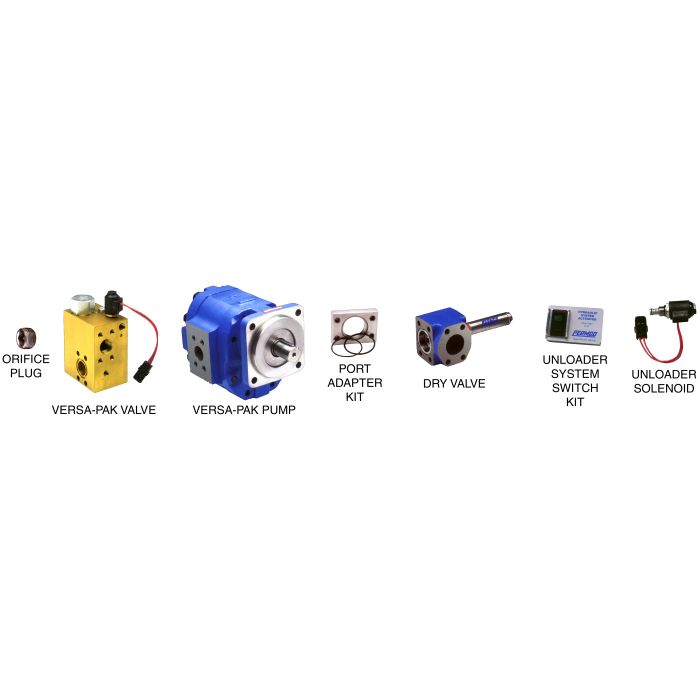
What's the difference between running this pump in a dry valve setup versus the unloader setup, and which one's better for a truck that sits idle a lot?
Question by: Wayne F on Jun 1, 2025, 9:50 PM
Good question to work through before you commit to a configuration. In a dry valve setup, the valve acts as a pressure-compensated flow control, so it lets a preset amount of flow reach the hydraulic system and sends the excess back to tank at low pressure. That's real useful for keeping heat from building up when the system isn't actively working, which matters a lot on a truck that spends chunks of time idling. The unloader setup takes it a step further by routing 100% of flow back to tank at extremely low pressure whenever the hydraulic circuit isn't needed. Both reduce wear from overspeeding and overpressurizing, but if your truck idles frequently and you want the least possible heat and pressure load on the system during those windows, the unloader configuration is generally the more aggressive approach for that use case.
Answer by: Customer Support on Jun 3, 2025, 11:04 AM
What sort of trucks are these pumps typically used on?
Question by: Brenda J on Jun 23, 2025, 10:55 AM
These Permco Versa-Pak pumps are designed specifically for refuse truck hydraulic systems.
Answer by: Customer Support on Jun 24, 2025, 7:28 PM
trying to decide between the dry valve setup and the unloader setup, what’s the real difference when the truck’s not running the hydraulics?
Question by: Debbie H on Mar 20, 2026, 2:31 PM
When the circuit is not being used, the Unloader configuration sends 100% of the pump flow back to tank at extremely low pressure. With the Dry Valve configuration, the valve works like a pressure compensated flow control. It limits flow to a preset amount for the system and returns the extra flow to tank at low pressure, which helps cut down on heat buildup during idle and reduces wear tied to overspeeding and overpressurizing.
Answer by: Customer Support on Mar 22, 2026, 11:25 AM