
-
All Products
- Hydraulic Power Systems & Components
- Hydraulic Pumps & Accessories
- Hydraulic Motors & Accessories
- Hydrostatic Transmissions
- Cylinders & Accessories
- Steering Units & Accessories
- Hydraulic Valves & Accessories
- Ball Valves
- Check Valves
- Check Valves (Pilot-Operated)
- Counterbalance Valves (Overcenter Valves)
- Cushion Valves (Double Relief Valves)
- Directional Control Valves
- Flow Control Valves
- Flow Divider Valves
- Gate Valves
- Shop Logic Element Valves
- Needle Valves
- Plug Valves
- Pressure Reducing Valves
- Relief Valves
- Shop Sandwich Valves
- Premium Selector Valves
- Hydraulic Filters & Accessories
- Power Units
- System Accessories
- High Force Hydraulics
- Hydraulic Pumps & Accessories
- Pneumatic Power & Control
- Fluid Conveying
- Hose Products
- Tubing Products
- Piping Products
- Adapters
- Steel
- O-Ring Face Seal Braze Adapters
- O-Ring Face Seal To Straight Thread O-Ring
- O-Ring Face Seal To Pipe
- O-Ring Face Seal To 37° Flare
- O-Ring Face Seal To O-Ring Face Seal
- O-Ring Face Seal Accessories
- Pipe To Pipe
- Pipe to 37° Flare
- Pipe To Straight Thread O-Ring
- Pipe To Hose
- 37° Flare Union
- Straight Thread O-Ring to 37° Flare
- Straight Thread O-Ring to Straight Thread O-Ring
- Straight Thread O-Ring to Hose
- SAE Split Flange To 37° Flare
- SAE Split Flange To O-Ring Face Seal
- Braze & Weld to 37° Flare
- 42° Inverted Flare to 37° Flare
- Restrictor
- Metric to 37° Flare
- Metric to Pipe
- Metric
- BSPP to 37° Flare
- BSPP to Pipe
- BSPP to Metric
- BSPP to BSPT
- BSPP
- BSPT To Pipe
- BSPT To 37° Flare
- JIS
- JIS 30° Seat (BSPP Thread) To 37° Flare
- Komatsu, Kobelco
- Stainless Steel
- Brass
- Steel
- Hydraulic Quick Disconnects
- Miscellaneous Fluid Conveying Parts
- Performance Parts
- Hose
- Adapters
- Brake System Adapters
- Fuel System Components
- Couplings
- PRO CLAMP and Overbraid
- Accessories
- Reusable Fittings for AQP & Starlite Racing Hose
- Crimp Fittings for AQP & Starlite Racing Hose
- Fittings for AQP Socketless Hose
- Reusable Fittings for Aeroquip FBF A/C Hose
- Fittings for Teflon Racing Hose
- Reusable Fittings for AQP High Pressure Hose
- Assembly Equipment
- Hose Products
- Other Products
- Seals
- Control Cables
- Thread Sealants
- Gloves
- Hand Tools
- Pressure Washer Products for Industrial & Commercial Use
- Hose Reels
- Winches
- Peel Press Drive
- Hydraulic Fluids & Oils for Industrial Systems
- Industrial Chemical Maintenance Products
- Lubrication Equipment & Accessories
- Cable Hardware & Knobs
- Cable Remote Controls
- Industrial Corrosion Inhibitors
- Y Strainer
- Hydraulic Power Systems & Components
- Services
- Branch Locations
- Catalogs
- Quick Order
- Help
Hydraulic Solenoid Operated Valves
Maximize hydraulic system performance with our solenoid-operated valves for precise directional control. Choose from DG4V-3 and DG4S4-01 series, available in subplate or manifold mount options with 4-way, 3-position tandem or float center configurations. We also stock SV series 2-way, 2-position solenoid cartridge valves in normally closed and normally open models, with or without coils. Whether you need soft-shift operation or open-to-tank logic, our in-stock options are ready to ship with expert support available for industrial and mobile applications.
-
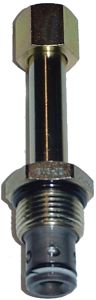 SV3-16-O Series 2-Way, 2-Position, Normally Open Solenoid Cartridge Valves, Up To 35 GPM & 3000 PSI
Product is currently not available online.
Please call 800-507-9651 for assistance. -
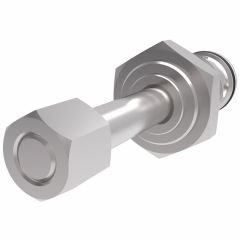 SV3-16-O Series 2-Way, 2-Position, Normally Open Solenoid Cartridge Valve, Housing: None, Coil: Not Included
Product is currently not available online.
Please call 800-507-9651 for assistance.
My Wish List
Last Added Items

You have no items in your wish list.
Quick Add Product
Account Summary
Short Code:
Credit Limit:
Current Balance:
Choosing the Right Hydraulic Solenoid Valve
Selecting the correct solenoid valve starts with system requirements such as operating pressure, flow rate, fluid type, and actuation speed. DG4V-3 and DG4S4-01 valves serve high-demand industrial circuits that need reliable 4-way control and multiple center conditions, while compact SV series cartridge valves suit installations with tight space or modular layouts and are offered in normally closed or open versions. Soft-shift variants reduce hydraulic shock during spool movement, helping protect sensitive components. Most valves on this page use standard NFPA D03 or D05 mounting patterns, allowing straightforward integration into new designs or retrofits.
Hydraulic solenoid valves are especially critical in sectors like manufacturing, marine and shipbuilding, and power generation, where directional control systems must operate consistently under pressure. For more industry coverage, explore all the industries we serve.
Maintenance and Replacement Considerations
Routine inspection and timely replacement of wear parts extend solenoid valve service life and minimize downtime. Many cartridge valves, including SV models, are sold without coils or housings, making coil-only swaps quick and economical. DG4S4-01 replacement parts are available in air-gap and wet-armature coil designs, so confirm electrical and mechanical compatibility before installation. Always consult the product datasheet, use spacer kits where specified, and check for debris or seal wear that could impair performance. Proper maintenance ensures consistent valve actuation and long-term system reliability.
Visit our contact page or reach out to our repair service center for expert support.
Hydraulic Solenoid Valve FAQs
What Is a Hydraulic Solenoid Valve Used For?
A hydraulic solenoid valve directs fluid flow by shifting an internal spool when electrically energized. DG4V-3 and DG4S4-01 models provide 4-way, 3-position directional control for industrial applications, while SV series cartridge valves support compact, modular systems in normally open or normally closed configurations.
What’s the Difference Between Tandem, Float, and Closed Center Configurations?
Tandem center valves allow fluid to return to the tank in the neutral position. Closed center valves block all ports to hold actuators in place. Float center valves connect work ports to the tank, enabling free actuator movement. These configurations help tailor system behavior during idle operation.
Do These Valves Come With Coils and Housings?
Some solenoid valves include coils and housings, while others do not. SV cartridge models are typically sold without coils for modular flexibility. DG4S4-01 valves generally come with coils, and compatible replacements are available in air gap and wet armature designs.
How Do You Test or Replace a Hydraulic Solenoid Valve Coil?
Disconnect power and use a multimeter to verify voltage at the terminals. Measure coil resistance to check for continuity. To replace the coil, remove the retainer, slide off the old coil, and install a new one that matches the valve’s voltage and design. For assistance with replacement parts or product compatibility, contact our team or visit our repair service center.