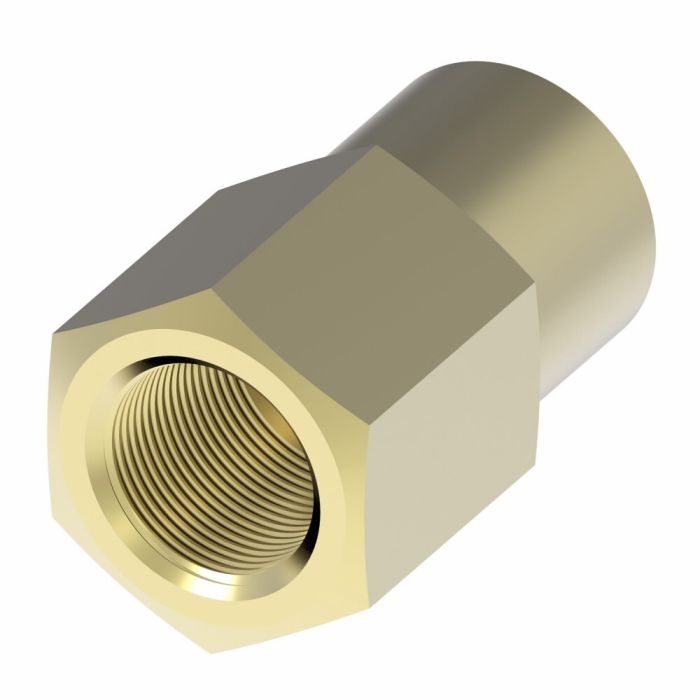
Alternate Part NumberC1HD51, Alternate Part Number MI-00266234, Alternate Part Number MINO-00925F05977
Application
Other - Hydraulic brake, power steering, fuel lines and transmission cooler lines, LP and natural gas (special order)
Certifications
SAE 040103
Brand
Danfoss Power Solutions (II LLC Aeroquip)
Brand
Aeroquip
Pack Size
1.00
UOM
EA
End Gender 1
13553
End Gender 2
13555
End Size 1
0.13
End Size 2
0.44
End Type 1
NPTF
End Type 2
SAE
Features
Dura-Kote plating for superior corrosion resistance|Design flexibility with hundreds of styles to choose from|Higher operating pressures above SAE standards
I need this to connect up a fuel line. I see "other" listed as the application - will this do the job?
Question by: Daryl M on Apr 9, 2025, 5:31 PM
Yes, this Eaton brass connector is designed for use in fuel lines, among other applications like hydraulic brakes, power steering, and transmission cooler lines. It's also suitable for LP and natural gas applications, but those are special order.
Answer by: Customer Support on Apr 11, 2025, 1:39 PM
Got a 1/8 NPT port on a power steering line and need to step up to a 1/4 inverted flare fitting. this one gonna work for that?
Question by: Johnny P on May 10, 2025, 9:27 PM
That's what this fitting is built for. One end is 1/8 female NPT and the other is 1/4 female SAE 42-degree inverted flare, so connecting those two thread types in a straight adapter configuration is right in its wheelhouse. Power steering lines are listed as a supported application, and the brass construction holds up well in that kind of environment. The Dura-Kote plating also adds a layer of corrosion protection beyond what bare brass gives you, which matters when you're dealing with fluid lines that see heat and pressure cycles regularly.
Answer by: Customer Support on May 12, 2025, 5:39 PM